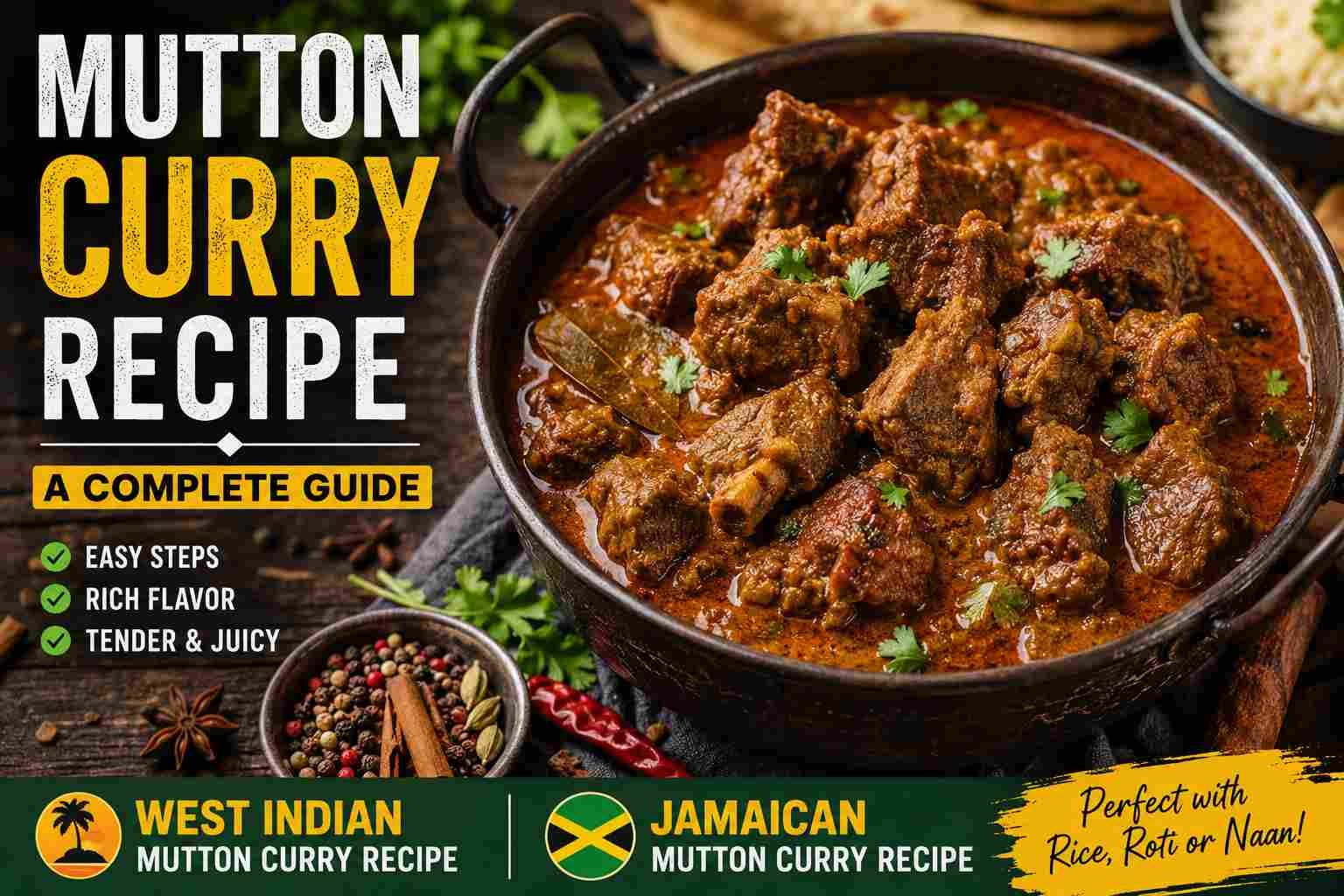
Mutton curry is one of the most beloved dishes across South Asia, the Caribbean, and many other parts of the world. Known for its rich flavours, tender meat, and aromatic spices, this hearty dish is a favourite for family dinners, festive gatherings, and special occasions. Whether served with rice, naan, roti, or paratha, a well-cooked mutton curry can transform any meal into a memorable feast.
In this comprehensive guide, you’ll learn everything about preparing a delicious mutton curry recipe, including ingredients, cooking methods, expert tips, variations, nutritional information, and answers to common questions. By the end, you’ll have all the knowledge needed to create a restaurant-quality curry in your own kitchen.
Table of Contents
What Is Mutton Curry?
Mutton curry is a savoury dish made by slow-cooking goat or sheep meat with onions, tomatoes, spices, herbs, and various seasonings. The slow cooking process allows the meat to become tender while absorbing the rich flavours of the curry base.
Although many regions have their own versions, the core elements remain the same: quality meat, aromatic spices, and patience during cooking.
Why Mutton Curry Is So Popular
There are several reasons why mutton curry has remained a favourite for generations:
- Rich and complex flavor profile
- High protein content
- Versatile serving options
- Suitable for special occasions and everyday meals
- Can be customized with regional spices and ingredients
- Delicious leftovers that often taste even better the next day
Ingredients for a Traditional Mutton Curry Recipe
Main Ingredients
- 1 kg mutton (bone-in preferred)
- 3 large onions, finely sliced
- 3 medium tomatoes, chopped
- 2 tablespoons ginger-garlic paste
- 4 tablespoons cooking oil
- 2 green chilies, slit
- Fresh coriander leaves for garnish
- Salt to taste
Whole Spices
- 2 bay leaves
- 4 cloves
- 4 green cardamoms
- 1 cinnamon stick
- 1 teaspoon cumin seeds
Ground Spices
- 2 teaspoons coriander powder
- 1 teaspoon turmeric powder
- 2 teaspoons red chili powder
- 1 teaspoon cumin powder
- 1 teaspoon garam masala
Optional Ingredients
- ½ cup yogurt
- Potatoes
- Coconut milk
- Curry leaves
Recipe to Make Mutton Curry
This step-by-step recipe to make mutton curry is easy to follow and produces a rich, flavourful dish.
Step 1: Clean and Marinate the Mutton
Wash the mutton thoroughly and drain excess water.
Mix the meat with:
- Yogurt
- Ginger-garlic paste
- Turmeric powder
- Salt
Allow it to marinate for at least 1 hour. For best results, marinate overnight in the refrigerator.
Step 2: Prepare the Curry Base
Heat oil in a heavy-bottomed pot.
Add:
- Bay leaves
- Cloves
- Cardamoms
- Cinnamon stick
- Cumin seeds
Sauté until fragrant.
Add sliced onions and cook until golden brown.
Step 3: Add Aromatics
Mix in:
- Ginger-garlic paste
- Green chilies
Cook for 2-3 minutes until the raw smell disappears.
Step 4: Add Tomatoes and Spices
Add chopped tomatoes and cook until soft.
Now add:
- Turmeric powder
- Coriander powder
- Red chili powder
- Cumin powder
Cook until the oil begins to separate from the mixture.
Step 5: Cook the Mutton
Add marinated mutton and stir well.
Cook over medium heat for 10-15 minutes, allowing the meat to absorb the spices.
Step 6: Add Water
Pour enough hot water to cover the meat.
Bring to a boil.
Step 7: Slow Cook
Cover and simmer for 60-90 minutes, depending on the meat’s tenderness.
Stir occasionally and add water if necessary.
Step 8: Finish the Curry
When the meat becomes tender:
- Add garam masala
- Adjust salt
- Garnish with fresh coriander
Serve hot.
Choosing the Best Mutton for Curry
The quality of meat significantly affects the final result.
Look for:
- Fresh pink-red color
- Moderate fat content
- Bone-in pieces for extra flavor
- Young goat meat for tenderness
Avoid meat that appears dark or dry or has an unpleasant odour.
Essential Spices That Enhance Flavor
A great curry depends on balanced spices.
Turmeric
Adds colour and earthy flavour.
Coriander
Provides freshness and mild citrus notes.
Cumin
Creates warmth and depth.
Garam Masala
Adds complexity and aroma.
Red chilli powder
Provides heat and vibrant colour.
Cardamom and Cloves
Enhance the fragrance of the curry.
Cooking Methods for Mutton Curry
Traditional Pot Cooking
Slow cooking develops maximum flavour.
Benefits include:
- Better texture
- Richer gravy
- Authentic taste
Pressure Cooker Method
Ideal for busy cooks.
Cooking time:
- Approximately 25-35 minutes
Advantages:
- Faster preparation
- Tender meat
- Energy-efficient
Slow Cooker Method
Perfect for hands-off cooking.
Cook on low for:
- 6-8 hours
Result:
- Extremely tender meat
- Deep flavor development
West Indian Mutton Curry Recipe
The West Indian mutton curry recipe is known for its unique Caribbean influence. Unlike South Asian versions, it often includes curry powder blends, Scotch bonnet peppers, and local herbs.
Ingredients
- 1 kg mutton
- 3 tablespoons Caribbean curry powder
- 1 onion
- 3 cloves of garlic
- Thyme
- Scotch bonnet pepper
- Potatoes
- Salt
- Oil
Preparation
- Season the mutton with curry powder and spices.
- Brown the meat in oil.
- Add onions, garlic, and thyme.
- Stir in additional curry powder.
- Add water and simmer.
- Include potatoes halfway through cooking.
- Cook until the meat is tender.
The result is a flavourful curry with a slightly smoky and spicy Caribbean character.
Jamaican Mutton Curry Recipe
The Jamaican mutton curry recipe is one of the Caribbean’s most famous dishes. It combines traditional curry flavours with bold Jamaican seasonings.
Ingredients
- 1 kg mutton
- Jamaican curry powder
- Scotch bonnet pepper
- Garlic
- Ginger
- Potatoes
- Green onions
- Thyme
- Allspice
Cooking Instructions
Season the Meat
Rub mutton with:
- Curry powder
- Salt
- Garlic
- Ginger
Allow it to marinate.
Burn the curry.
Heat the oil and cook the curry powder briefly before adding the meat.
This traditional Jamaican technique deepens flavour.
Simmer Slowly
Add water and cook until the meat becomes tender.
Add potatoes.
Cook until the potatoes soften, and the gravy naturally thickens.
The finished dish delivers bold Caribbean flavours with a rich and spicy sauce.
Common Mistakes to Avoid
Using Insufficient Cooking Time
Mutton requires patience.
Rushing leads to tough meat.
Overloading Spices
Too many spices can overpower the dish.
Balance is key.
Skipping Marination
Marination improves tenderness and flavour.
Adding Excess Water
Too much water dilutes the curry.
Add gradually as needed.
Not Browning Onions Properly
Golden onions create a flavourful curry base.
Tips for Tender Mutton Every Time
- Marinate overnight
- Use yogurt or lemon juice
- Cook on low heat
- Choose younger meat
- Avoid excessive stirring
- Allow resting time before serving
What to Serve with Mutton Curry
Mutton curry pairs beautifully with the following:
Rice Options
- Steamed basmati rice
- Jeera rice
- Coconut rice
- Peas rice
Bread Options
- Naan
- Roti
- Chapati
- Paratha
Side Dishes
- Raita
- Salad
- Pickles
- Chutneys
Nutritional Benefits of Mutton Curry
Mutton offers several valuable nutrients.
Protein
Supports muscle growth and repair.
Iron
Helps prevent iron deficiency.
Zinc
Supports immune function.
Vitamin B12
Important for nerve health and energy production.
Healthy Fats
Provide satiety and flavour.
Storing and Reheating Mutton Curry
Refrigeration
Store in an airtight container for up to 3 days.
Freezing
Freeze for up to 3 months.
Reheating
Heat gently on the stove.
Add a small amount of water if necessary.
Regional Variations of Mutton Curry
Indian Style
Rich spices and tomato-based gravy.
Pakistani Style
Often features extra onions and robust spice blends.
Bengali Style
Includes potatoes and mustard oil.
Caribbean Style
Uses curry powder and local peppers.
Sri Lankan Style
Frequently incorporates coconut milk.
How to Make Restaurant-Style Mutton Curry
To achieve restaurant-quality results:
- Use fresh whole spices
- Brown onions thoroughly
- Marinate overnight
- Slow-cook the meat
- Finish with garam masala
- Garnish generously with fresh herbs
These small details create remarkable differences in flavour.
Conclusion
A well-made mutton curry recipe is a perfect blend of tender meat, aromatic spices, and rich gravy. Whether you choose a traditional South Asian version, a West Indian mutton curry recipe, or a Jamaican mutton curry recipe, the secret lies in quality ingredients, proper seasoning, and patient cooking.
By following the techniques and tips outlined in this guide, you can confidently prepare a flavourful mutton curry that rivals restaurant versions. Serve it with rice or bread, share it with family and friends, and enjoy one of the world’s most comforting and satisfying dishes.
Frequently Asked Questions (FAQs)
1. What is the best cut of mutton for curry?
Bone-in shoulder, leg, and neck cuts are ideal because they become tender during slow cooking and add flavour to the gravy.
2. How long should mutton curry cook?
Traditional cooking typically takes 60 to 90 minutes, while a pressure cooker can reduce the time to around 30 minutes.
3. Can I make mutton curry without yoghurt?
Yes. Yoghurt is optional and mainly helps tenderise the meat and add richness.
4. Why is my mutton still tough after cooking?
The meat may need more cooking time. Older animals generally require longer cooking.
5. Can I freeze mutton curry?
Yes. Properly stored mutton curry can be frozen for up to three months.
6. What makes Jamaican mutton curry different?
Jamaican curry often includes Scotch bonnet peppers, thyme, allspice, and the traditional technique of burning curry powder in oil.
7. Is mutton curry healthy?
In moderation, mutton curry provides protein, iron, zinc, and vitamin B12 while offering a satisfying meal.
8. Can I make mutton curry less spicy?
Absolutely. Reduce the amount of chilli powder and omit hot peppers.
9. What is the secret to flavourful mutton curry?
Slow cooking, quality spices, proper marination, and patient simmering are the main secrets.
10. Which rice goes best with mutton curry?
Basmati rice is the most popular choice because its aroma complements the rich curry flavours perfectly.